
| ADAPTIVE WELLBEING SYSTEMS · PRACTICE INSIGHTS |
| Jean-Louis Lambeau (photos and text) |

| CORE ARGUMENT On 29 February 2024, Zambia declared a national disaster. The El Niño-induced drought had pushed over 9 million people into deepening insecurity across 84 districts. One of the drought’s policy lessons was not only that households needed more support, but that support had to move across sectors faster than the system was designed to do. Agriculture, nutrition, health, energy, education, protection, and public finance were all simultaneously under stress. Systems built sector by sector are not equipped for a shock that moves across all of them at once. In an era of rising climate volatility, poverty reduction depends less on the scale of emergency response than on the continuity and integration of essential services. This challenge requires a structural response: a minimum integration pathway that enables households to move across services without being lost at the intersections between programmes. |
One Shock, Many Waves
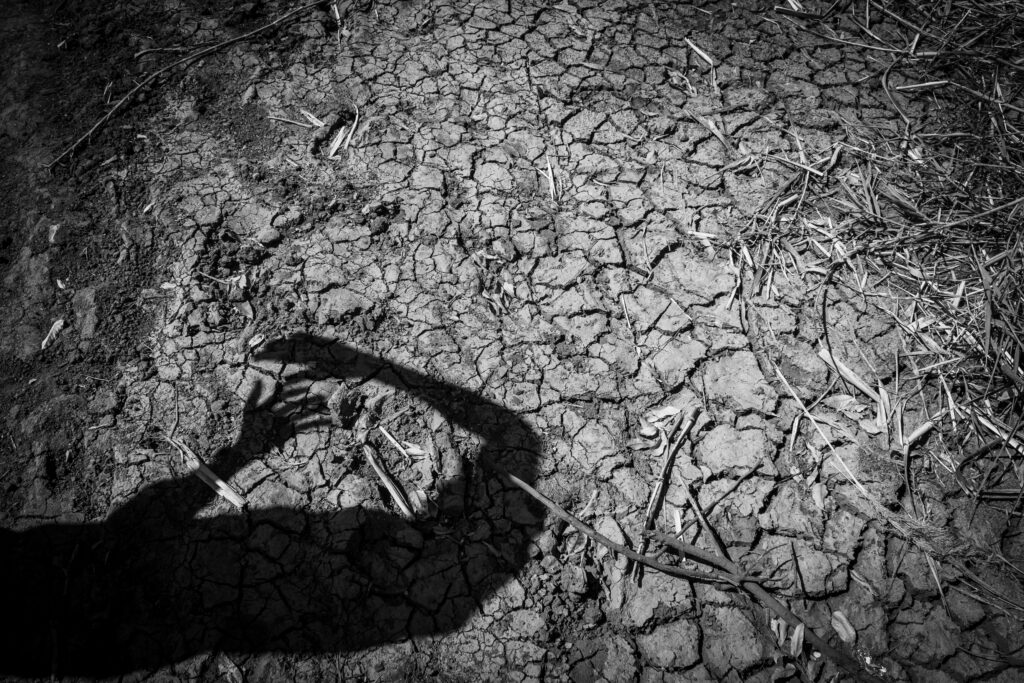
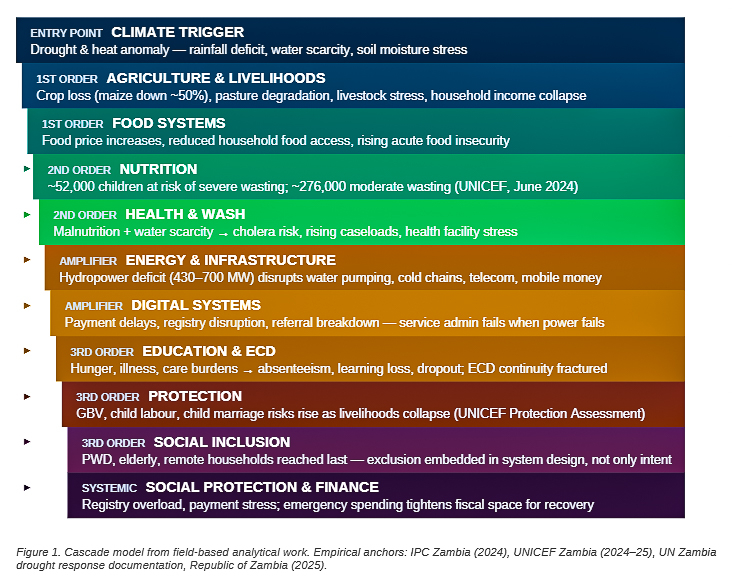
On 29 February 2024, Zambia declared the drought a national disaster. Over 9 million people were affected across 84 districts. 6.6 million were targeted for life-saving and early recovery assistance. What these figures do not capture is the structural nature of the disruption: a single climate event propagated through multiple interconnected systems, simultaneously.
From Coverage to Continuity
Coverage, adequacy, and targeting remain essential design features of social programmes. However, they do not determine whether a social system can support households whose needs are shifting simultaneously across sectors.
Social protection does more than compensate poverty: across the life cycle, child benefits, including school-related cash support, maternity benefits, disability benefits, and old-age pensions give households the minimum conditions to seek care, keep children in school, maintain nutrition, and avoid destructive coping strategies. In that sense, social protection functions as access-enabling social infrastructure. However, it does not by itself guarantee that the corresponding services are physically reachable, operationally functional, or designed for the households that need them.
A cash transfer may enable a household to seek health care, but it does not ensure that medicines are available, electricity is functioning, facilities are physically accessible to persons with disabilities, or that women and children facing violence can reach safe and appropriate protection services. The connection between social protection and the services it is meant to support is real, but conditional.
The inclusion test: does the pathway work for the most excluded?
Drawing on literature and experience related to health systems (e.g. the three delays), disability-inclusion, adaptive social protection, and the capability approach, those conditions appear central to whether a benefit translates into an actual outcome for a given household or right holder.
Physical accessibility
Is the service geographically reachable, and for whom? Are roads passable, service points accessible for persons with disabilities, elderly people, or carers with young children?
Administrative accessibility
Can the person enter the service without prohibitive paperwork, missing documentation, or disconnected registries? Many households are excluded not because the service does not exist, but because they cannot navigate its entry conditions.
Functional quality
Does the service exist in practice? A clinic without medicines, a school without attendance, a social worker without a functioning response chain are present but effectively absent.
Appropriateness and inclusion
Is the service designed for different users? An information system that works for literate adults with smartphones excludes elderly users, persons with disabilities, and those without connectivity. A standard service is not necessarily a usable one.
Continuity under stress:
Does the service hold during drought, power disruption, or fiscal contraction – precisely when demand is highest? This is the test that climate shocks apply most harshly.
Local institutional capacity
Is there a district office, outreach worker, or community structure capable of receiving and processing the case? Adaptation and inclusion happen locally. They are only as strong as the local system that receives them.
Pre-existing mechanisms such as Cash Plus programming linking cash transfers to nutrition and health services, the Single Window Delivery System as an integrated district and community service model, and TRANSFORM district capacity building, had laid partial groundwork for cross-sector coordination. Policy and programme documentation associates these with reduced duplication, more structured district planning, and positive operational synergies and they likely helped ease coordination pressures during a multisector crisis. Whether these mechanisms made a measurable difference in response quality across districts is a question that would benefit from further comparative research. What the evidence and experience shows is that integration built before a shock makes coordination during it more feasible, more coherent, and operationally less costly.
| Integration must be measured against the hardest cases, not the standard user. A pathway that functions for an enrolled, mobile, digitally connected adult has not yet proven complete. To meet that test, it must provide safe referral, active follow-up, reasonable accommodation, and offline fallback where needed. Women & girls exposed to GBV: Climate and economic stress often heighten the risk of violence and intensify barriers to support. The pathway must include safe, confidential, survivor-centred referral to protection services beyond detection. Children exposed to violence, neglect, or malnutrition: Violence against children takes physical, emotional, and sexual forms, compounded by neglect and care disruption. A child protection alert that does not cross safely into follow-up services is a pathway that stops exactly where it matters most. Persons with disabilities (PWD): PWD face specific barriers at every stage: inaccessible early warning information, mobility constraints at distribution points, digital payment systems designed without assistive compatibility, and referral chains that do not account for communication differences. Remote or administratively invisible households: Households without legal identity or prior programme enrolment are invisible, the pathway cannot reach them if detection depends on prior registration. Climate stress compounds invisibility through physical inaccessibility: drought degrades roads, floods cut off communities, and extreme heat constrains the mobility of outreach workers and households alike. The most remote households are often the last to be reached in normal times and the hardest to reach when conditions are worst. A pathway that relies on households coming to services will systematically fail the most isolated at the moment of greatest need Digitally excluded users: Mobile money, digital registries, and online grievance systems exclude users without connectivity, literacy, or devices. In a power crisis, they exclude everyone unless offline and assisted alternatives are built in from the start. |
The strongest systems often remain invisible, until they fail.
The Minimum Integration Pathway
The minimum integration pathway is presented here as a practical workflow for functional cross-sector coordination in contexts where full institutional integration is not yet feasible. It is the operational answer to the last-mile problem in a multisector system: not only reaching households, but ensuring that, once reached, they are not lost between services. It does not require institutional merger or perfect digital interoperability, but it does require minimum local authority to coordinate, referral traceability, proportionate information-sharing, complaint mechanisms, workforce capacity, and offline or assisted access where digital systems or physical infrastructure fail.
DETECT
Identify vulnerability through frontline signals – absenteeism, malnutrition screening, protection alerts, water disruption, disability-related exclusion – before households reach acute deterioration. Detection must work for households that are invisible, unreachable by fixed service points, or unable to present themselves due to mobility constraints, care burdens, or physical inaccessibility during crisis.
TRIAGE
Prioritize risk across its full dimensions simultaneously: income, nutrition, health, protection exposure, disability, education, and care burden – not sector by sector. Triage must recognize layered risk: a household facing income loss, a child with acute malnutrition, a woman at risk of GBV, and a person with a disability whose assistive services have been disrupted is one case, not four.
REFER
Transfer the case across sectors with shared information and clear accountability. A referral is a transfer of responsibility with follow-through. Caution: for survivors of violence and persons at risk, confidentiality and informed consent are conditions without which the pathway causes harm rather than protection.
FOLLOW UP
Track whether the household reached the next service, whether that service was functional and usable, and whether the most excluded were actually reached rather than administratively recorded as referred. Measure referral completion, time to service receipt, continuity of essential services, and drop-off at each junction.
ACCOUNT
Record outcomes, complaints, and gaps. Name who was reached, who was not, and why. Accountability closes the loop and generates learning to improve continuity and performance of the system.
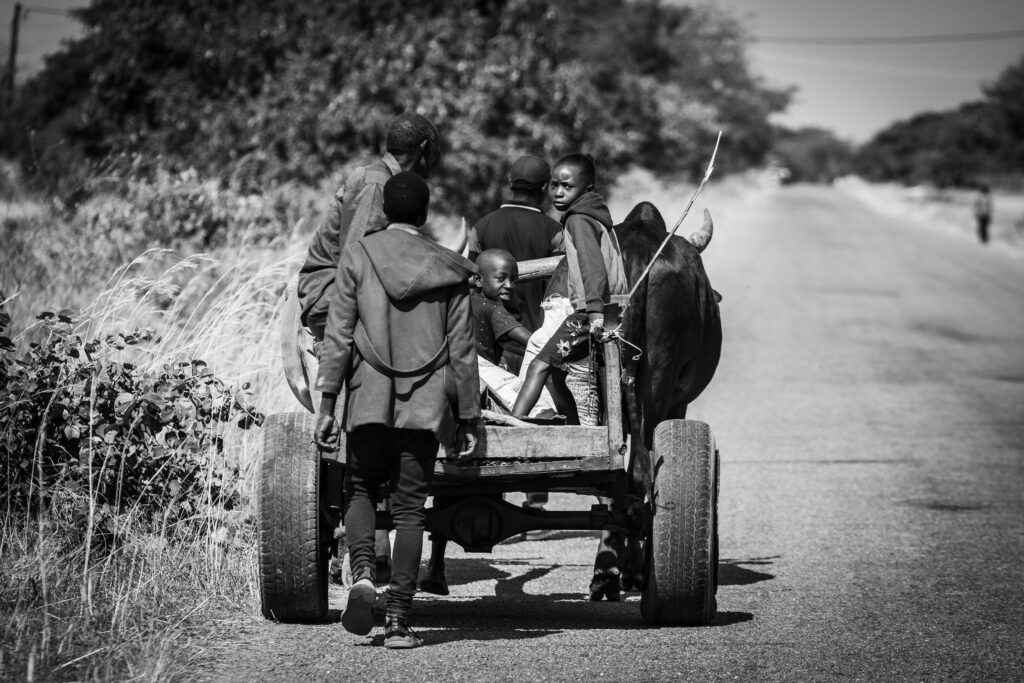
| Why transitions matter: Integration failure most often occurs between sectors, not within them. A health system may function internally. A social protection programme may have adequate coverage. A protection monitoring mechanism may exist on paper. But if the household facing simultaneous income loss, acute malnutrition, school dropout, and exposure to violence has no way of being seen as a single case, the system has failed at the only moment that matters. |
From Coverage to Protection: Continuity as Public Architecture
Working across sectors and across crises, in Zambia and elsewhere, the failure point is rarely within a sector. It is usually at the transition between them. When households experience risk as a cascade, continuity is what converts coverage into protection. A cash transfer can reach a household, but it does not by itself ensure that nutrition services are functioning, that the health facility has medicines, that a referral is completed, or that a girl facing violence can move safely into the next service. Coverage is reach. Protection is sustained outcome. Between the two lies continuity: invisible when it works, catastrophic when it fails. A system with strong programmes and weak transitions is a wall with sound bricks and little mortar: it stands until it is tested, and the test is coming with greater frequency and force.
Poverty reduction is a systemic outcome produced by the continuity of linked functions across income support, nutrition, health, education, protection, and administrative systems.
This matters beyond 2024, because Zambia, and the wider sub-Saharan African region, is moving into a hotter era marked by higher baseline temperatures, more frequent and intense heat extremes, and rainfall variability that generates both recurrent drought stress and episodic flood damage. Zambia’s own climate planning documents describe these trends as already intensifying, with projected warming and continued climate instability across the coming decades. The 2024 drought was a preview of the conditions under which social systems will be asked to perform for decades. Under those conditions, poverty reduction will not be decided mainly by emergency response capacity or by programme performance within sectors. It will be decided by whether the welfare architecture holds when the shock moves through all sectors at once.
The households most likely to fall through the gaps are already known: remote communities whose roads are the first to fail, women and girls whose risk of violence rises when livelihoods collapse, children whose malnutrition goes undetected when schools close, persons with disabilities whose assistive systems are the first to be overlooked, and users without connectivity in a system increasingly built around it. For the most vulnerable, continuity is the difference between a system that reaches them, and a system that loses them at the moment it matters most.
This is why continuity must be designed as public architecture. The core reform question here is not whether to create a new system, but whether social policies and delivery systems can be redesigned to sustain resilience and enable adaptation of vulnerable households, maintaining continuity across services for those most likely to be dropped at the last mile.
Institutions and social policies of the future are being designed today.
Sources
Zambia: primary empirical sources
American Institutes for Research. 2018. *Evaluation of the First 1000 Most Critical Days Programme in Zambia*. Washington, DC: AIR.
IPC Zambia. 2024. *Acute Food Insecurity Situation April 2024 to March 2025*. ipcinfo.org.
Republic of Zambia. 2018. *Integrated Framework of Basic Social Protection Programmes*. Lusaka: ILO / Government of Zambia.
Republic of Zambia. 2023. *National Adaptation Plan for Zambia*. Lusaka: Ministry of Green Economy and Environment. unfccc.int.
Republic of Zambia. 2025. *National Social Protection Policy*. Lusaka: Ministry of Community Development and Social Services / UNICEF.
Reuters. 2024a. “Zambia Plans to Import and Ration Electricity Due to Drought.” February 29, 2024.
Reuters. 2024c. “World Bank Approves $208 Million for Zambia’s Drought Response.” July 2, 2024.
TRANSFORM. 2025. “Newsletter.” December 19, 2025. .
UN Zambia. 2024. *Zambia Drought Response Appeal, May to December 2024*. zambia.un.org.
UNICEF Zambia. 2024a. *Immediate Action Required to Prevent Malnutrition Crisis Among Children in Zambia*. June 2024.
UNICEF Zambia. 2025a. *Country Office Humanitarian Situation Report 2025*.
UNICEF Zambia. 2025b. *Rapid Assessment of Protection Risks and Service Mapping in Drought*.
Thematic and methodological references
African Development Bank. 2017. *Pilot Program for Climate Resilience: Zambia Project Document*. afdb.org.
Alliance for Child Protection in Humanitarian Action. 2024. *Inter-Agency Guidelines for Case Management and Child Protection*. 2nd ed.
Bowen, Thomas, Carlo del Ninno, Colin Andrews, Sarah Coll-Black, Ugo Gentilini, Kelly Johnson, Yasuhiro Kawasoe, Adea Kryeziu, Barry Maher, and Asha Williams. 2020. *Adaptive Social Protection: Building Resilience to Shocks*. Washington, DC: World Bank.
ILO. 2021. Governance of Social Protection Systems: A Learning Journey, Modules 1 & 2.
Lindert, Kathy, Tina George Karippacheril, Inés Rodríguez Caillava, and Kenichi Nishikawa Chávez, eds. 2020. *Sourcebook on the Foundations of Social Protection Delivery Systems*. Washington, DC: World Bank.
OECD. 2023. *Integrating Local Services for Individuals in Vulnerable Situations*. OECD LEED Papers 2023/08. Paris: OECD Publishing.
UNDRR. 2023. *Inclusive Early Warning Early Action: Checklist and Implementation Guide*. Geneva: UNDRR.
UNDRR and ATscale. 2025. *Leveraging Assistive Technology for Inclusive Disaster Risk Reduction and Climate Action*. Geneva: UNDRR.
UNFPA ESARO. n.d. “Gender-Based Violence.” esaro.unfpa.org.
UNICEF. 2024. *Case Management in the Context of Care Reform in Eastern and Southern Africa*. Nairobi: UNICEF.
UN Women. 2025. “Facts and Figures: Ending Violence Against Women.” knowledge.unwomen.org.
WHO. 2016. *INSPIRE: Seven Strategies for Ending Violence Against Children*. Geneva: WHO.
World Bank. 2025. “Identification for Development.” worldbank.org.